Advancing Speech Technology for All
New report highlights
May 1
of Global languages are not supported by Meta, Open AI
of children aged 3-17 have speech, language, voice or swallowing disorders
fewer errors when systems work with diverse datasets
African languages with no speech recognition model available



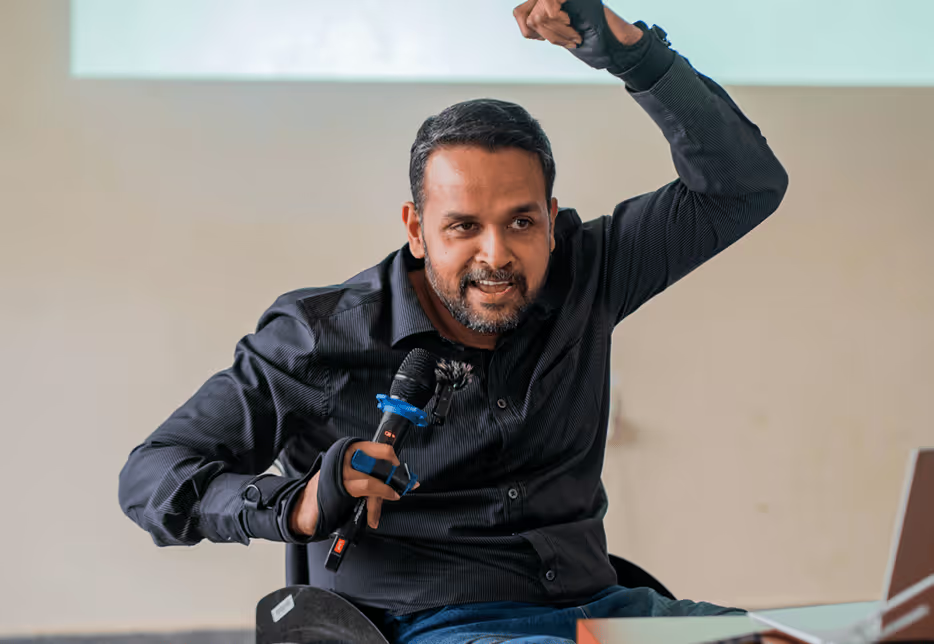
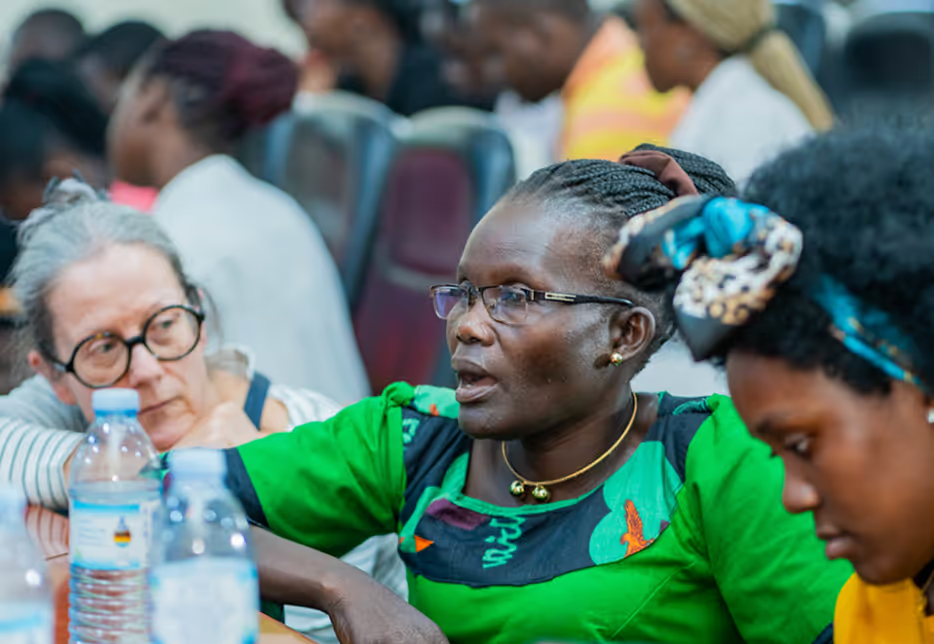
The Centre for Digital Language Inclusion (CDLI) is a pioneering initiative focused on advancing inclusive Automatic Speech Recognition (ASR) technology for people with non-standard, slurred, or hard-to-understand speech, particularly in African languages. CDLI's work aims to reduce communication barriers by ensuring that speech technologies understand people whose voices are often excluded from mainstream systems.
Most existing speech recognition tools work well in major languages with standardized speech patterns, often leaving out people with speech impairments and speakers of under-represented languages. In Africa, where access to traditional speech therapy and assistive technologies is limited, this barrier is more pronounced. CDLI's approach ensures that non-standard speech in native African languages is included and accurately recognised, unlocking greater communication access and digital participation.
Traditional speech recognition systems tend to fail when processing speech that doesn't match standard accents or speech patterns. This exclusion affects millions of people with speech impairments, limiting their access to technology and digital services. CDLI collects diverse speech data and develops inclusive ASR models so that people with communication challenges can use technology confidently and without stigma.
CDLI conducts ethical, community-centred data collection, recruiting volunteers with diverse speech patterns to record samples. This process gathers real, representative voice data across languages and conditions, which is then used to train ASR models. Inclusivity and consent are central to the project's approach.
CDLI collaborates with universities, disability advocates, tech innovators, speech therapists, and local organisations. These co-creation efforts help ground the technology in real needs, foster local innovation, and ensure that projects reflect actual user experiences, not just abstract technical design.
Yes, one of CDLI's core commitments is to make its datasets, models, and tools open source and freely available. This ensures that developers, researchers, and communities can build new inclusive solutions, promote innovation, and scale access to communication technologies widely.
By developing inclusive ASR technology, CDLI hopes to: • Enable people with non-standard speech to be understood by digital systems; • Expand access to communication tools in native African languages; • Empower individuals with speech impairments to engage in education, work, and social life; • Support developers and communities to build new solutions on open data and models.
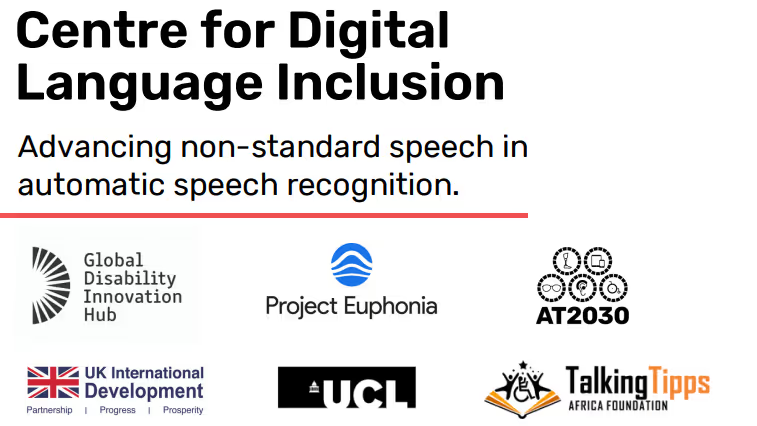
CDLI is led in collaboration with organisations and research partners committed to digital inclusion. Grants, sponsorships, and innovation partnerships help fund data collection, technological development, training programs, and community engagement activities that drive the initiative forward. (Specific funders and partners are detailed on the CDLI site where available.)
.jpeg)
