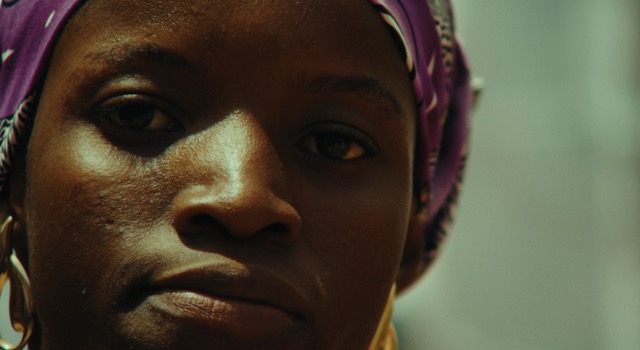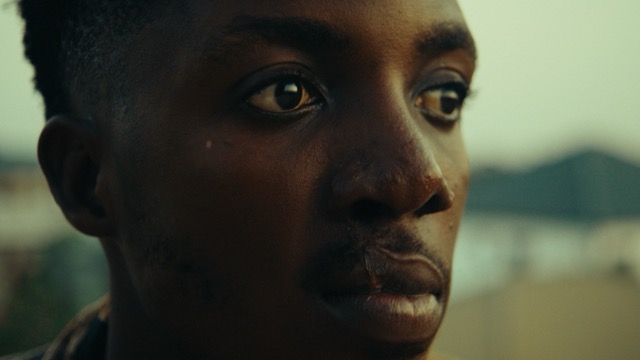
LONDON / ACCRA - As the world races toward an AI-driven future, a poignant new film series reveals a stark reality: millions with slurred or difficult-to-understand speech are being "left out of the algorithm". These intimate and poetic portraits follow individuals in Ghana who have the most to gain from inclusive research, yet currently find their voices categorised as "noise" by standard technology.
The films capture the work of the Centre for Digital Learning and Inclusion (CDLI) led by University College London’s (UCL) Global Disability Innovation Hub (GDI Hub) who are harnessing the power of AI to develop pioneering automatic speech recognition (ASR) solutions for impaired speech. By collecting and sharing impaired speech data and training AI models to recognise impaired speech this initiative is building speech recognition for everyone.
With support from Google.org and the UK International Development-funded AT2030 programme, the CDLI has captured 13 languages across 5 countries and 2 continents, and is building a wider movement for language inclusion to enable people with non-standard speech to communicate in their language of choice. This work began with early research using Google’s ‘Relate’ application as featured in the films. While effective, this was limited to English. By expanding language coverage and developing open-source data sets that can be combined with app development and training, the CDLI has established a replicable model that is accelerating innovation and democratising access for all.
Launched on World Day for Assistive Technology, these videos focus on the potential of digital assistive technologies - and the importance of ensuring no-one is left out of the algorithm during this critical stage of AI and ASR innovation.
Beyond the Disability
This series captures the deeply personal struggle for basic communication in Ghana. Radia, one of the film’s subjects, explains that without a medium for expression, "people around you cannot get you". She notes that while current voice-to-text tools are life-changing, they often fail those who speak African languages: "The only problem, it doesn't work with the Ghanaian language... it's only English."
For Osar, a barber in Accra who was born with a cleft palate, the stakes are equally high. He describes the isolation of having to write down thoughts because of the difficulty of being understood with his condition. "We need to associate with all human beings, how they talk, how they react, so that the machines too will understand them," Oscar says. "So we should not be left behind."
Innovating for Inclusion
The films capture a collaboration between the University of Ghana and the UCL GDI Hub, with support from Google.org, to bridge the data gap for impaired speech in 5 major Ghanaian languages. The University of Ghana led the Akan data collection activities - out of which, emerged the powerful individual stories.
This initiative isn't just about data; it’s about dignity. Alongside individual reflections, the films showcase an innovation event in Accra, where 16 teams of university students, each including a person with a speech impairment, developed prototypes using a newly built Akan (Automated Speech Recognition) model.
Standout innovations included:
- Akan Messaging Integration: An app allowing users with speech impairments to speak in Akan and output clear text or voice.
- Healthcare Chatbots: Leveraging Akan language ASR to help patients with disabilities communicate symptoms more effectively.
- Localised Solutions: Moving away from "one-size-fits-all" apps to tools built for Ghanaians, by Ghanaians.
The subsequent Ga dataset was designed and commissioned by GDI Hub and collected and operationalised by the University of Ghana, in collaboration with University College London and Talking Tipps Africa, through the CDLI as part of a project to support the development of automatic speech recognition tools for impaired speech in Ghanaian languages.
Global Law firm Hogan Lovells, co-sponsored the initiative and will be providing pro bono legal advice to the programme through their impact venture initiative HL BaSE.
A Call to democratise access to AI technology
This work proves that when local talent is given open-source tools, they can solve real-world exclusion. As Radia concludes in her film, regarding the need for diverse language data: "Everybody has to be part of it. It’s very important".
World Day for Assistive Technology - 4th June
World Day for Assistive Technology champions the importance of assistive technology (AT) to increase access and raise awareness, especially in low- and middle-income countries.
Assistive technology (AT) is an umbrella term for tools, equipment, software, or systems designed to enhance, maintain, or improve the functional capabilities of people with disabilities or age-related limitations, supporting their independence, participation, and well-being (WHO). It can address challenges in mobility, communication, cognition, hearing, vision, and self-care, enabling users to engage in daily activities, education, work, and social life.
Watch the films and join the mission: Partner with us: Visit cdl-inclusion.com to learn how you can support inclusive AI.
Film Credits
Insert CDLI / UCL / GOOGLE credits here
Director & DOP: Witness
Production & Creative: Witness Studios
Post House: Witness Studios
Producer: Dom Hicks
Colour: PTP Colour
Mix: Kerem Aksoy
Music: Simon Frost
Fixer: WB Group
About University College London (UCL)
UCL is a global top 10 university, set up in London 200 years ago to offer education for all. Today, we gather 60,000 staff and students, from over 150 countries, to create a unique city within a city – a research and innovation powerhouse that leads the world in subjects spanning the arts, sciences, technology and the humanities. We’ve nurtured 33 Nobel Prize winners, because here, brave ideas have the scale and the support they need to succeed. We are University College London. And here, it can happen.
UCL turns 200 in 2026. Join us for a year of bicentennial events and celebration.
%20Medium.jpeg)